
Group Therapy

Group therapy is a powerful and highly effective method of addressing interpersonal issues. Problems that are well-suited to group therapy include: patterns of relationship dysfunction, social skills and communication enhancement, and issues related to intimacy and trust. When people enter group therapy and interact freely with other group members, they often recreate the difficulties that brought them to therapy in the first place. While interpersonal issues are often initially addressed during individual therapy, group therapy offers multiple relationships to assist the individual in further growth and problem solving.
People who make good candidates for group therapy may have:
- Desire for personal growth
- Shyness
- Interpersonal difficulties
- Social anxiety
- Have problems “fitting in”
- Problematic behaviors
- Conflict with coworkers or peers
- Difficulties with assertiveness
- Feel misunderstood by others
- Frequent feelings of anger
- Patterns of family or relationship problems
- Problems with trust and intimacy
- Existential concerns
Group therapy provides the unique opportunity to observe and reflect on your own and others’ interpersonal skills and to give and receive feedback in an interpersonal context that more accurately reflects real life. Under the skilled direction of the therapist, the group is able to give support, offer alternatives, or gently confront the person. Through this process, insight is gained, alternative behaviors are learned, and the person develops new and more effective ways of relating to others.
Some of the benefits of group therapy may include:
- Hope
- Guidance
- Social skills building
- Catharsis
- Existential factors
- Interpersonal learning
- Resolution of family issues
- Altruism
While most people have some fear of opening up to others, after a few sessions members usually find that they are able to open up in the group. Members learn through active participation as well as observation. Typically groups consist of 6 to 10 members that meet weekly for 90 minutes. Groups range in duration, from 10 weeks to one year. A minimum of one individual evaluation session is required of all candidates for group therapy in order to determine if group therapy could be an effective approach and which group would be most beneficial to the specific goals of the client. Individuals who are suicidal, homicidal, psychotic, or in the midst of a major crisis are typically not good candidates for group therapy until their emotional and behavior states have stabilized.
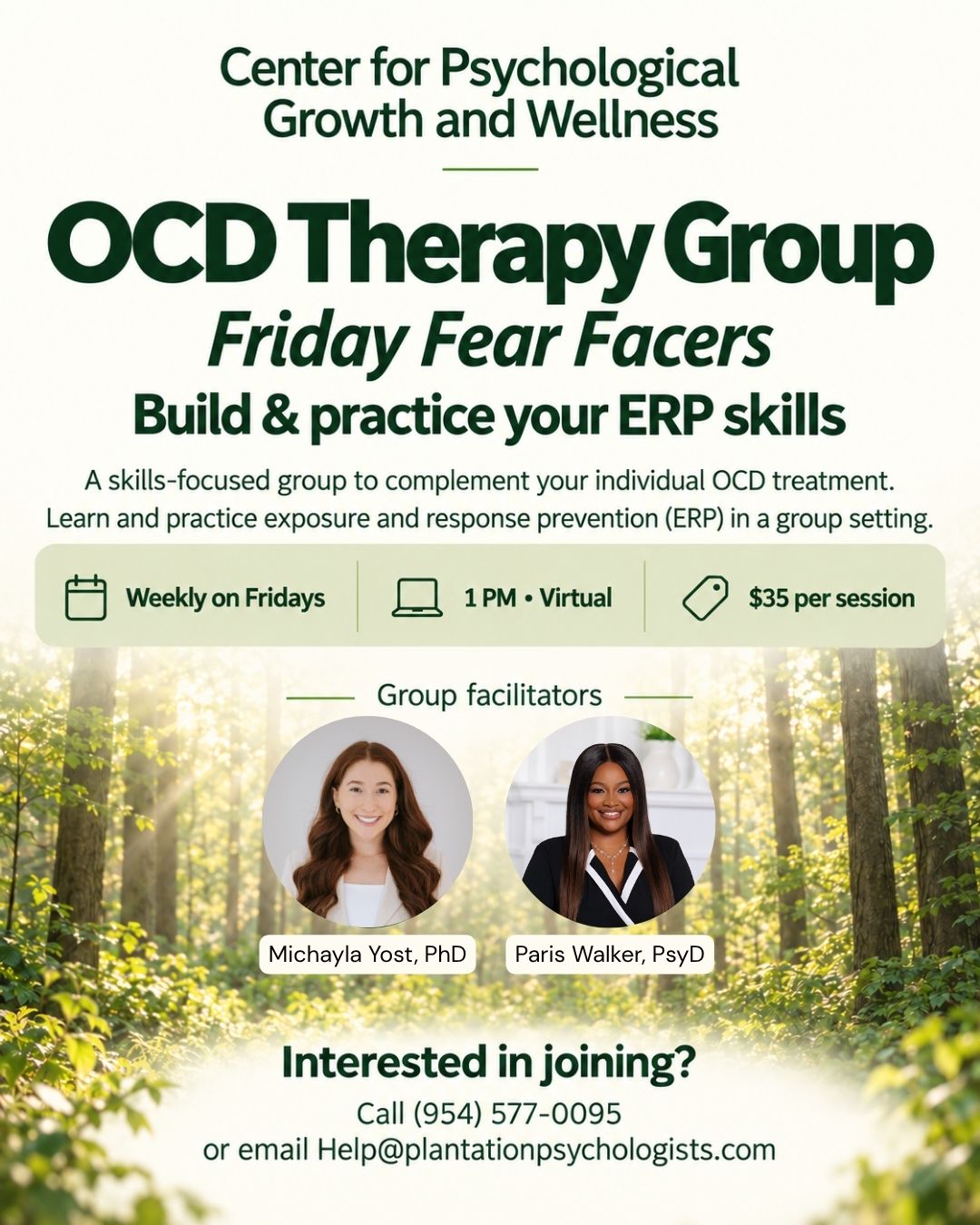
Friday Fear Facers is a weekly therapy group for adults focused on building and practicing exposure and response prevention (ERP) skills to reduce OCD symptoms. Offered through the Center for Psychological Growth and Wellness, the group provides structured opportunities to learn, practice, and apply these skills in daily life. Who the Group Is For The group welcomes adults with OCD across all themes and subtypes, including contamination, checking, relationship concerns, harm-related fears, unwanted sexual thoughts, religious or moral concerns, health-related fears, and pregnancy or postpartum concerns. Other presentations may include perfectionism or “just right” experiences, doubts about past events, existential concerns, and heightened attention to bodily sensations. Both observable and mental compulsions are addressed, including reassurance seeking, reviewing memories, analyzing feelings, and mentally neutralizing unwanted thoughts. Skills and Session Structure Sessions combine education, guided ERP practice, and discussion of how to apply skills between meetings. Areas of focus include: Identifying triggers, avoidance, and physical or mental compulsions. Developing manageable exposures tailored to individual concerns. Practicing response prevention and reducing reliance on rituals. Building willingness to experience uncertainty and discomfort while participating in meaningful activities. Participation is limited to eight adults to allow time for practice, discussion, and individualized feedback. The group is intended to complement individual OCD treatment, although working with an individual therapist is not a requirement. Schedule and Registration Co-facilitators: Michayla Yost, PhD, and Paris Walker, PsyD Schedule: Fridays at 1 PM Format: Virtual via Google Meet Fee: $35 per session For more information or to inquire about joining, contact the Center for Psychological Growth and Wellness at (954) 577-0095 or Help@plantationpsychologists.com .

Learn how specialized child therapy helps children cope with high-conflict custody cases, divorce stress, and emotional challenges. Discover expert support and reunification therapy options.

Learn what OCD is, its symptoms, common themes, and treatment options. Find expert therapy and support in Plantation, Florida.